Service · Custom software
Custom software and web applications, built around how you work
Fennr Studio builds custom web applications for businesses and founders in Pune and across India. These are platforms with accounts and roles, dashboards that replace spreadsheets, internal tools, and first versions of new products.
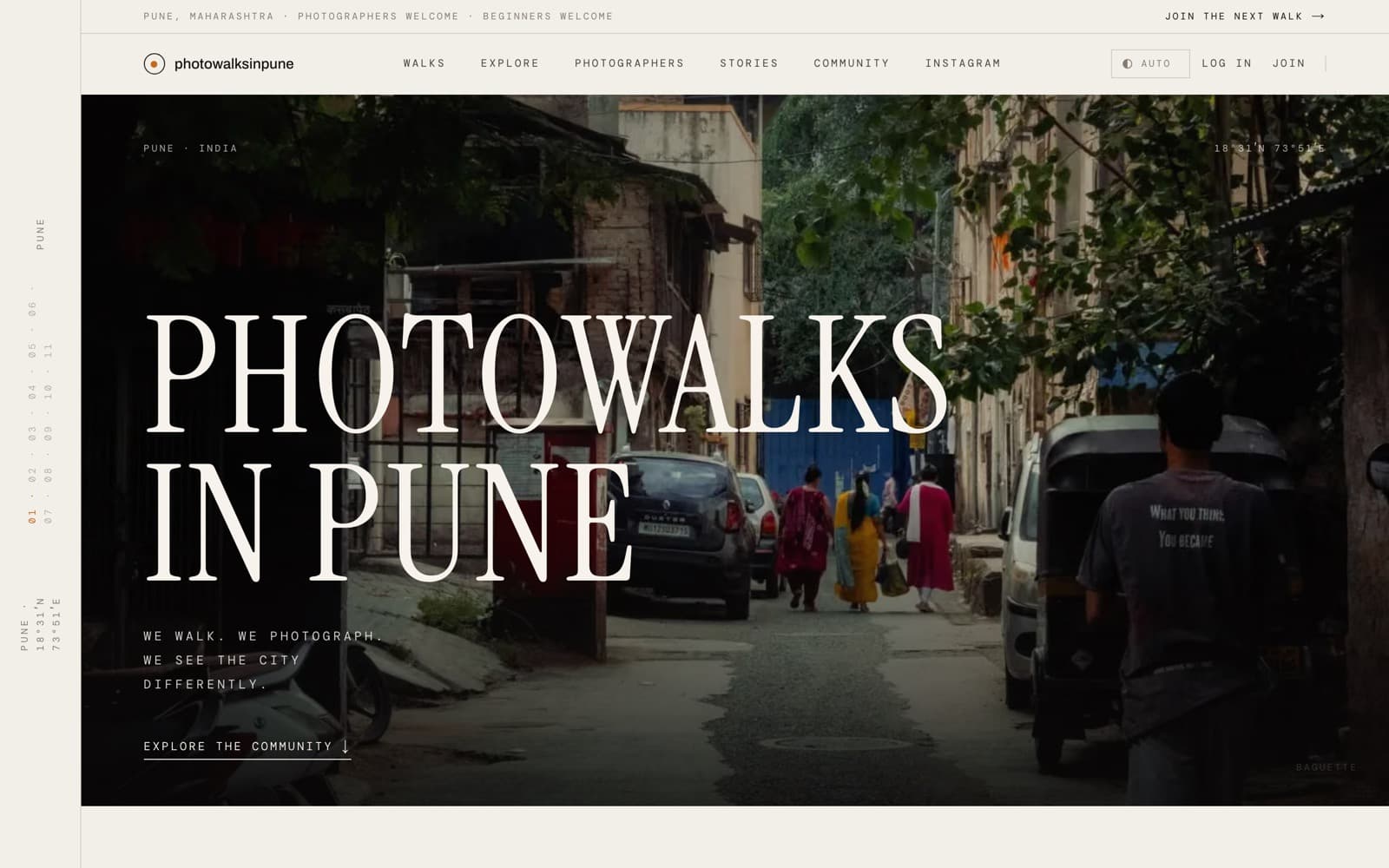
It's the kind of software we run ourselves. This studio's own lead pipeline is a custom app: a protected admin dashboard over a Postgres database, a daily follow-up digest sent by a scheduled job, and a WhatsApp flow engine that captures leads into a CRM. Photowalks in Pune runs on the same foundations, with member accounts, photographer profiles, walk registrations and a searchable photo archive.
Who it's for
Who custom software & web apps is for
Communities and platforms that need accounts, profiles and member areas
Teams replacing spreadsheets and WhatsApp groups with a real tool
Founders building an MVP or a first production version
Businesses whose process doesn't fit off-the-shelf software
Problems we solve
What usually goes wrong — and how we fix it
The business runs on spreadsheets and group chats.
We turn the process into an app: one place for the data, the right people seeing the right things, and nothing lost in a chat thread.
Off-the-shelf tools almost fit, but not quite.
We build the part that's specific to you and connect it to the tools you keep, rather than forcing a whole new system on the team.
We need to test a product idea without a huge build.
We scope the smallest version that proves the idea and ship it in weekly sprints, so you're in front of real users in weeks, not months.
Our last build was impossible to change.
A mainstream, typed stack (Next.js, TypeScript, Postgres) with code another developer can read. You own the repository from day one.
Deliverables
What you get
Web applications with sign-up, login and roles
Member platforms and public profile pages
Admin dashboards and internal tools
MVPs and first production versions
Postgres data models with row-level security
Scheduled jobs: digests, reminders, syncs
Integrations with WhatsApp, CRMs, payments and email
Code in your own repository, with documentation
Tools & technology
- Next.js
- React
- TypeScript
- Supabase / Postgres
- Supabase Auth
- Vercel Cron
- WhatsApp Cloud API
- Resend
Process
How a project runs
Map the workflow
Who does what, with which data, and where it breaks today. The output is a one-page scope with the first version clearly marked.
Data model and flows
The tables, roles and permissions, and the screens each person needs. Agreed before code, so the build doesn't wander.
Weekly sprints
A working build every week on a staging URL you can use yourself. Priorities can change between sprints.
Launch and hand over
Production deployment, access control checked, backups and monitoring on, and documentation for whoever maintains it next.
Selected work
Custom Software & Web Apps projects
Real projects, linked to the live sites. See all our work.
Industries
Industries we build for
- Industry
Clinics & Healthcare
Calm, credible sites with services, specialists, timings and one-tap appointments — plus the local search presence patients use to choose.
Read more - Industry
Hotels, Villas & Resorts
Booking-led sites with full-bleed photography of rooms, dining and grounds, and enquiry or booking a tap away.
Read more - Industry
Photographers & Creatives
Image-first portfolios and community platforms — full-bleed galleries that stay fast on a phone over mobile data.
Read more
Across India
Custom software for teams across India
Weekly sprints work the same remotely: a demo on a call, a staging build you can use, and a shared list of what's next.
We build on infrastructure with Indian and global regions, and keep data in the region that suits your users and compliance needs.
Questions
Custom Software & Web Apps FAQs
What's the difference between a website and a web app?
A website mostly presents information. A web app has accounts, data and logic: people sign in, do things, and the system remembers. If people need to log in, it's a web app.
How fast can an MVP be live?
A working MVP typically takes four to six weeks depending on scope. We work in weekly sprints, so you see progress every week rather than at the end.
Who owns the code?
You do. The repository, database and hosting accounts are in your name from the start.
Can you work on an existing app?
Often, yes. We review the codebase first and tell you plainly whether extending it or rebuilding parts of it is the better investment.
Related services
Often paired with
- Service
Website Development
Fast, production-grade business websites with booking, ordering, WhatsApp and payment integrations, on a codebase you own.
Read more - Service
AI Automation & Integrations
WhatsApp Business API flows, lead capture into your CRM, AI assistants and the integrations that stop work falling between tools.
Read more - Service
Website Design
Mobile-first websites designed around a single decision — book, order, enquire or buy — with the copy and structure to support it.
Read more
Fennr Studio is based in Shivajinagar and works with businesses across Pune and remotely across India.
Tell us what you're building.
The first strategy call is free, and you'll leave with a scope on a page whether or not we work together.